
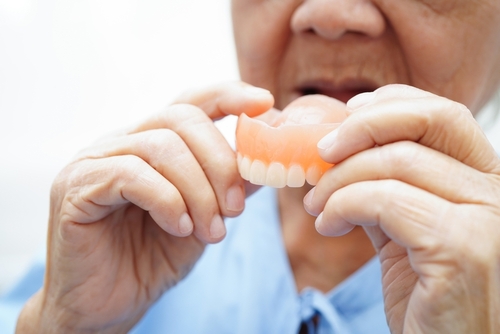
What is it like living with a floating denture? Consider navigating your entire day on roller skates. Forward motion is possible, but nothing happens on autopilot. Balance requires constant input. You monitor your stance, adjust your movement, and anticipate each shift before it happens. Progress depends less on ease and more on control. Movements that once felt natural demand planning and restraint. A floating denture creates that same kind of mental and physical negotiation. Speaking, chewing, and smiling still happen, but they come with quiet calculations in the background. You manage pressure, timing, and positioning without consciously naming it. Fortunately, advances in dental care have reframed what support can look like.
Today, options such as mini dental implants can replace that constant adjustment with stable, reliable support. With that foundation in place, everyday movements begin to feel natural again.
What Is a Floating Denture?
A floating denture develops when a denture no longer maintains a close, stable relationship with your jaw and gums. As the bone beneath the denture changes over time, the surface it once fit against begins to shrink and shift. The denture does not adjust on its own. Instead of resting securely, it starts to move. It may rock during speech, lift during swallowing, or slide when pressure is applied. This type of movement tends to appear gradually, which is why many people adapt to it without realizing how much stability they have lost.
Floating dentures occur most often with traditional full dentures that rely solely on gum contact, suction, or adhesive rather than direct support from the jawbone.
The Impact of a Floating Denture
Loose dentures tend to cause predictable problems because the base moves against soft tissue rather than resting steadily. Common effects patients notice over time include:
- Movement: Slipping or lifting during speaking, chewing, or swallowing.
- Sore spots: Irritation, raw spots, or ulcers from repeated rubbing.
- Risk of infection: Trapped food and plaque that inflame the gums and raise infection risk.
- Chewing difficulty: Reduced bite control that changes how you eat day to day.
- Jaw strain: Uneven pressure that can trigger muscle fatigue, jaw discomfort, or headaches
What Are the Benefits of an Implant Denture?
The way to move beyond a floating denture is to change its support. Dentures that rest only on the gums have no direct connection to the jawbone, which allows movement over time. Dr. Coolican addresses that weakness by creating a support system that anchors the denture to bone rather than soft tissue.
He places mini dental implants directly through the gums and into the jawbone. These small titanium posts integrate with the surrounding bone through a natural biological process called osseointegration. As the bone heals, it bonds to the implant and treats it as part of the structure it already knows how to support. That bond allows the implant to function much like a natural tooth root, providing a firm, stable point of attachment.
Once the implants are in place, Dr. Coolican secures the denture to them. The denture no longer relies on suction or adhesive alone. Instead, it rests on a fixed foundation that resists movement, restores control, and eliminates the need for constant adjustment.
How Can I Avoid Bone Loss With Dentures?
Bone loss after tooth loss follows a clear biological pattern. When a tooth root no longer stimulates the jawbone, the body begins to break down the bone as unnecessary. Dentists refer to this process as bone resorption. The jaw can lose a noticeable amount of ridge width within the first months to a year after an extraction, with continued shrinkage over time.
As that ridge narrows and flattens, a denture has less structure to rest on, which often leads to looseness and movement. Advanced bone loss can also limit eligibility for standard implants, since those implants require a wider, denser foundation or added procedures such as bone grafting.
That was the concern Dennis heard before visiting Mint Mini Dental Implants.
Mini dental implants have a narrower design, measuring just under 3 millimeters in diameter. This smaller size allows placement in areas with limited bone where larger implants are not practical. Once those implants integrate with Dennis’s jawbone, they provide stable support for his denture while also restoring the stimulation the bone needs to remain strong. In doing so, the implants help slow further bone loss and allow treatment that once seemed out of reach.
Discover a More Secure Way To Support Your Denture
If you want to understand why your denture no longer feels secure, or explore how implant support can restore stability, we can help. Dr. Coolican will evaluate your bone structure, denture fit, and long-term goals to determine whether mini dental implants can provide the support you need.
Contact us today to schedule a free consultation and explore a more dependable solution.

 English
  Spanish